High-Frequency Clickers Are Fooling Your Funnel — Here's How to Catch Them
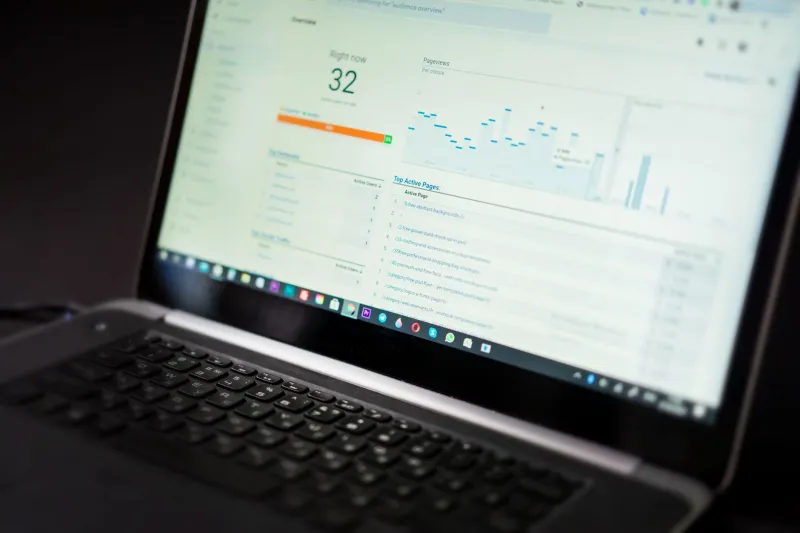
There's a moment every growth marketer loves: you pull up your analytics dashboard, and the click numbers are flying. Pages are getting hammered. CTRs are through the roof. Your campaign is clearly resonating, right?
Maybe not.
What looks like a surge of genuine interest can just as easily be a wave of empty activity — users (or bots, or curiosity-seekers) clicking furiously without any real intention of buying, subscribing, or doing anything remotely profitable. At PangClick, we call this the high-frequency trap, and it catches more marketing teams than most are willing to admit.
When Clicks Become Noise
Here's the core problem: most analytics tools reward volume. They're built to surface what's getting attention, not what's generating value. So when a cohort of users starts clicking through your site at warp speed — bouncing between your pricing page, your feature list, your FAQ, and back again — the platform logs all of it as engagement.
And engagement looks good in a report.
But speed itself is a red flag. Genuine buyers move through a funnel with deliberation. They pause on a pricing tier. They re-read a feature description. They open a second tab to compare. Rapid, machine-gun clicking rarely reflects that kind of considered behavior. It reflects restlessness, confusion, or automation.
The tricky part is that these hyper-clickers can skew your entire optimization strategy. If you're A/B testing a landing page and your highest-click variant is being hammered by low-intent users, you might declare a winner that actually performs worse with real buyers.
The Psychology Behind Fake Engagement
Not all high-frequency clicking is automated. Some of it is deeply human — and understanding why people click obsessively without converting is genuinely useful.
Curiosity without commitment. A significant chunk of your traffic is in what researchers sometimes call an "exploratory mode" — they're browsing the way someone window-shops on Fifth Avenue. They're not there to buy. They're just looking. These users click fast because they're scanning, not reading. They'll never convert, but they'll generate impressive session data.
Incentivized clicking. If you're running any kind of rewards program, referral campaign, or sweepstakes-style promotion, you've almost certainly attracted users who click to earn rather than click to buy. These folks are optimizing for your incentive structure, not your product.
Competitor research. Especially in SaaS, a meaningful percentage of your most active clickers are employees of competing companies mapping your UX, pricing, and feature set. They're thorough. They're methodical. And they will never, ever pay you a dime.
Automation tools. From browser extensions that prefetch pages to scraping scripts and click farms, a portion of high-velocity click activity isn't human at all. It's mechanical, and it's designed to either inflate metrics or extract data.
Building a Framework for Intent-Qualified Clicks
So how do you separate the signal from the noise? The good news is that buyer intent leaves traces — you just have to know what to look for.
Dwell Time as a Qualifier
Time-on-page is one of the most underused signals in most marketing stacks. A user who spends 45 seconds on your enterprise pricing page is a fundamentally different prospect than one who loads it and bounces in three seconds. Start segmenting your click data by dwell time, and watch your "engaged" cohort shrink dramatically — and become far more accurate.
Click Depth vs. Click Velocity
Rather than just counting clicks, measure the sequence of clicks. A user who moves from your homepage → product overview → case studies → pricing → contact form is demonstrating a clear progression of intent. A user who clicks twelve times in ninety seconds across six disconnected pages is demonstrating chaos. Build click-path scoring into your attribution model, even if it's just a simple tiered system to start.
Return Visit Patterns
High-intent buyers almost always come back. They visit once, leave, think about it, and return. Low-intent clickers tend to have single, frenetic sessions and disappear. Tracking return visits — especially to high-value pages like pricing or demo request forms — is one of the cleanest ways to identify who's actually in a buying cycle.
Micro-Conversion Anchors
Design deliberate friction points that only motivated users will bother with. A short quiz, a "build your plan" configurator, or even a multi-step form aren't just UX features — they're intent filters. Users who click through these micro-conversions are self-selecting as serious. Users who bounce off them were never going to convert anyway.
What to Do With the Data
Once you've built a cleaner picture of which clicks actually matter, the operational changes are pretty straightforward.
First, adjust your bidding and budget allocation. If you're running paid campaigns, feeding intent-qualified click data back into your ad platforms dramatically improves targeting. You're essentially telling the algorithm "find me more people who behave like these users, not those ones."
Second, recalibrate your content. If you find that high-intent users consistently engage with specific pieces — detailed comparison guides, ROI calculators, customer success stories — double down on that content. That's what's actually moving people toward a decision.
Third, clean up your reporting. Create a separate KPI for intent-qualified clicks versus raw clicks, and make sure your leadership team understands the distinction. Nothing derails a smart marketing strategy faster than executives optimizing for the wrong number.
The Bottom Line
Click volume is easy to generate. Intent is hard to manufacture. The most valuable thing your analytics stack can do is help you tell the difference — and right now, most platforms are failing at exactly that.
Don't let impressive click counts lull you into thinking your funnel is healthier than it is. Dig into the behavior behind the numbers. Your actual buyers are in there. They're just getting drowned out by a lot of very enthusiastic noise.