Your Click Numbers Are Lying: The Hidden World of Bot Traffic and Ad Fraud

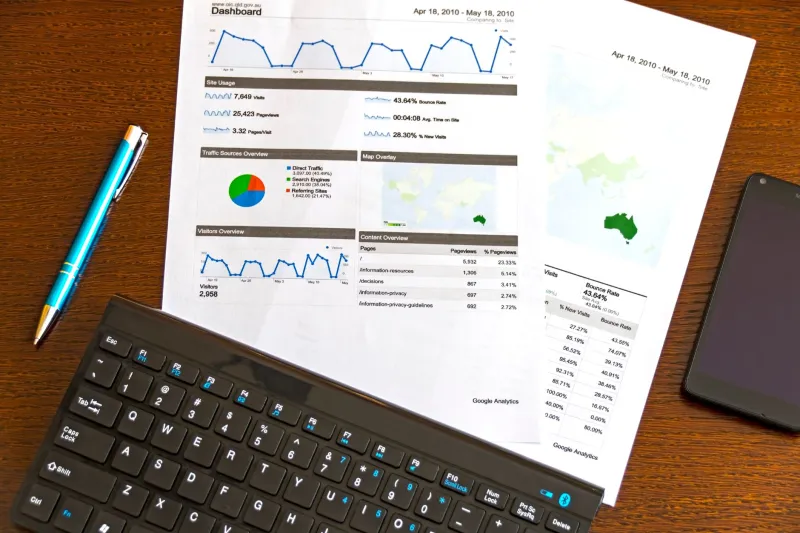
You launch a campaign. The clicks roll in. Your dashboard lights up like a pinball machine. And then... conversions flatline. Sales don't budge. Your cost-per-acquisition looks like a horror story.
Sound familiar? You might not have a strategy problem. You might have a fraud problem.
The dirty secret of digital advertising is that a significant chunk of the traffic most businesses are paying for isn't human. It's bots, scripts, click farms, and automated systems designed to drain your budget while making everything look like it's working. Welcome to the phantom click problem — and it's a lot bigger than most marketers want to admit.
The Scale of the Problem Is Staggering
Let's put some numbers on this. According to research from the Association of National Advertisers, ad fraud cost US advertisers an estimated $120 billion globally in 2023 — a figure that has climbed year over year with almost no signs of slowing. Separate analysis from cybersecurity firm HUMAN (formerly White Ops) found that certain ad verticals see invalid traffic rates as high as 40% on some placements.
Forty percent. That means for every ten clicks you're paying for in those environments, four of them never involved a real human being.
And it's not just programmatic display ads taking the hit. Pay-per-click search campaigns, social media promoted posts, affiliate traffic, and even organic engagement metrics can all be gamed. The methods are varied and increasingly sophisticated — from simple bot scripts crawling pages to elaborate click farms in Southeast Asia where real people are paid fractions of a cent to tap on ads all day.
Who's Behind the Curtain?
Understanding who is committing click fraud helps you understand where to look for it in your own data.
Competitors are one culprit. In competitive industries — insurance, legal services, home improvement — rivals sometimes run click fraud operations to exhaust a competitor's daily ad budget before peak traffic hours. You burn through your spend by noon, they own the afternoon.
Ad networks with bad inventory are another major source. Some lower-tier ad networks quietly bundle fraudulent traffic into their placements to hit delivery targets. Publishers get paid per impression or click, so there's a financial incentive to inflate those numbers artificially.
Affiliate fraud is particularly sneaky. Affiliates who earn commissions on traffic or leads have obvious motivation to generate fake activity that mimics real user behavior — complete with fake form fills and spoofed referral data.
Then there are sophisticated botnets — networks of compromised devices (including regular people's computers and phones) that generate traffic without the device owner ever knowing. These bots can mimic mouse movements, scroll behavior, and click patterns well enough to fool basic detection systems.
What Phantom Clicks Actually Do to Your Business
Beyond wasting your ad spend, fraudulent traffic poisons your entire decision-making process. Here's how:
- It distorts your audience data. When bots inflate traffic from certain sources or demographics, your targeting algorithms learn from bad inputs. Your next campaign gets optimized toward fake users.
- It corrupts your A/B tests. If one variant gets more bot traffic than another, you'll draw false conclusions about what's actually resonating with real customers.
- It tanks your Quality Score. High click-through rates with low conversion rates signal to platforms like Google that your landing pages aren't delivering — which raises your cost-per-click over time.
- It misleads your attribution models. Channels that look like they're driving engagement may just be driving bots, while genuinely effective touchpoints get undervalued.
In short, phantom clicks don't just waste money. They make your entire strategy dumber.
How to Audit Your Traffic and Spot the Fakes
You don't need to be a data scientist to start cleaning up your analytics. Here's a practical framework:
1. Look at your bounce rate and session duration by source. Bot traffic almost always shows either a 0-second session (the bot doesn't load the full page) or an unrealistically perfect session (scripted behavior). If a traffic source has an 80%+ bounce rate combined with unusually high click volume, that's a red flag.
2. Analyze geographic anomalies. If you're running a US-targeted campaign and you're suddenly seeing spikes from data center IP ranges or from countries that have nothing to do with your business, investigate immediately.
3. Check your conversion funnel drop-off rates. Real users who are genuinely interested in your product tend to explore. They visit multiple pages, spend time reading, maybe abandon a cart. Bot traffic often hits a landing page and disappears. A flat, top-heavy funnel with zero downstream engagement is suspicious.
4. Use IP exclusion lists. Google Ads and most major platforms let you exclude known data center IP ranges. Tools like ClickCease, TrafficGuard, and Fraudlogix offer automated solutions that block invalid traffic in real time.
5. Enable Google's Invalid Click reporting. It's not perfect, but Google does filter out some invalid clicks and provides a report showing how much was caught. If that number is consistently high, your placements may be particularly vulnerable.
6. Audit your affiliate partners. Request raw traffic logs from high-volume affiliates. Legitimate partners won't balk at transparency. If someone pushes back on providing data, that's your answer.
Building Cleaner Click Ecosystems Going Forward
Fraud isn't going away — if anything, it's getting more sophisticated as AI-generated behavior becomes harder to distinguish from real users. But that doesn't mean you're helpless.
The most resilient advertisers are the ones who build verification into their processes from the start rather than treating it as a cleanup task after the damage is done. That means investing in ad fraud detection tools as a standard line item, not an optional add-on. It means demanding transparency from your ad partners and platforms. And it means redefining success metrics around downstream outcomes — sales, signups, revenue — rather than raw click volume.
At PangClick, we believe that a click only counts when a real person makes a real decision. Everything else is just noise on your dashboard. The brands that thrive in this environment are the ones who learn to tell the difference — and refuse to pay for the noise.
Your traffic numbers might be lying to you right now. The good news is, the truth is findable. You just have to know where to look.